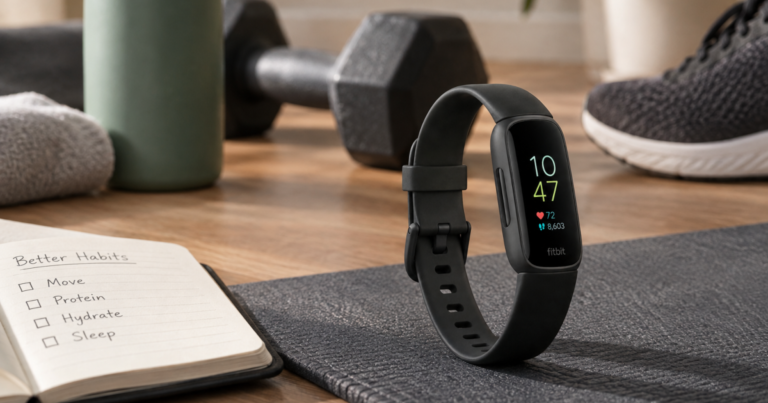

The appeal of a habit book is not that it can melt fat or build muscle on its own. It is that it might help you repeat the unglamorous behaviors long enough for them to matter. This Avery Atomic Habits review is really a question about friction: can a general habit book make the boring parts of body change easier to repeat?
Avery Atomic Habits
Strongest for readers who need repeatable systems and recovery after missed days more than exact fitness instructions
The specific item reviewed here is Avery’s Atomic Habits: An Easy & Proven Way to Build Good Habits & Break Bad Ones by James Clear. It is a habit-building self-help book, not a workout plan, nutrition plan, coaching service, or body recomposition protocol. That distinction matters. If you buy it expecting sets, reps, calories, or macros, you are buying the wrong tool. If you want a clearer way to make repeatable behaviors stick, it has a much stronger case.
Pros & Cons
Pros
- Targets the behavior problems that often derail routines: time, motivation, environment, and restarting after missed days.
- Available as hardcover, ebook, and audiobook download, so readers can choose the format they are most likely to finish.
- A 320-page book gives the framework more depth than a short checklist or motivational pamphlet.
Cons
- Not a workout plan, meal plan, coaching service, or body recomposition-specific program.
- Buying the book does not create accountability; results depend on applying the strategies.
- Useful behavior support, but insufficient for readers who need exact workouts, calories, macros, or progression programming.
Product Details
- Author: James Clear.
- Publisher: Avery.
- Publication date: Oct 16, 2018.
- Hardcover list price: $27.00.
- Hardcover length: 320 pages.
- Hardcover ISBN: 9780735211292.
- Hardcover dimensions: 6 x 9 inches.
- Formats shown: Hardcover, ebook, and audiobook download.
- Audiobook download length: 5 hours 35 minutes.
The real job of this book
Atomic Habits is built around the idea that small behaviors, repeated and shaped by better systems, can compound over time. The publisher describes it as a framework for improving every day by forming good habits, breaking bad habits, and mastering tiny behaviors. For body recomposition readers, the useful translation is simple: the book is not the plan, but it may help you keep showing up for the plan.
That is not a small thing. Many people do not fail because they have never heard of strength training, protein, walking, or sleep. They fail because those behaviors keep colliding with late workdays, low motivation, messy kitchens, awkward gym feelings, and the seductive belief that one dramatic reset will be easier than a boring repeatable Tuesday.
This is where the book’s behavioral focus fits. Its stated learning outcomes include making time for new habits, overcoming lack of motivation and willpower, designing the environment for success, and getting back on track after falling off course. Those are not body-composition outcomes, and the book does not promise them. They are adherence outcomes. In real life, adherence is often the hinge.
Where it fits in a body recomposition routine
The best use of Atomic Habits is alongside a real method, not in place of one. If your training needs structure, you still need exercise selection, progressive effort, and a way to decide when to add challenge. If your eating needs structure, you still need a sustainable approach to energy intake and meal consistency. A habit framework can make those choices easier to repeat, but it cannot define the technical details for you.
For example, a reader using progressive resistance training could use the book’s habit ideas to make training less dependent on mood. The practical question becomes: what cue starts the workout, what environment makes it easier, and what tiny version still counts on a bad day? That is a different question from “what is the perfect program?” and often a more useful one once the basics are chosen.
The same logic applies to nutrition. The book will not tell you how much protein to eat, how to build a calorie deficit, or how to structure meals. But it can help you think about the behaviors around those decisions: grocery patterns, default breakfasts, evening snack cues, or the restart routine after a weekend that did not go as planned. Tiny behaviors are not magical. They are just easier to repeat than heroic ones.
The 320-page question: depth or delay?
At 320 pages in hardcover, Atomic Habits is substantial enough to offer more than a motivational nudge. That can be a strength if you like concepts explained through a full nonfiction book rather than a worksheet or checklist. It gives the ideas room to breathe, and for many readers the repeated framing is part of what makes the system memorable.
The trade-off is that a book can become another form of preparation. Reading about habit design feels productive, and sometimes it is. But if you already know your next reasonable action, the book should not become a velvet rope between you and the first set of squats, the evening walk, or the simple high-protein dinner. A habit book earns its keep when it changes behavior, not when it becomes another trophy on the self-improvement shelf.
The format choice helps here. Hardcover suits readers who annotate and return to chapters. The ebook is easier to carry. The audiobook download runs 5 hours 35 minutes, which makes it realistic for commutes, walks, or household tasks. That flexibility matters because the best format is the one you will actually finish and revisit.
Value depends on what problem you are buying it to solve
The hardcover list price is $27.00. For that, you get a self-contained nonfiction book rather than an app, course, tracker, or coaching program. There are no required companion products for the book’s primary function. That simplicity is refreshing: buy the book, read or listen, apply what is useful.
Value looks strongest if your bottleneck is consistency. If you keep starting plans and abandoning them when life gets noisy, the book’s emphasis on cues, environment, identity, and recovery after missed days is directly relevant. If you already have steady routines and mainly need better programming, food targets, or progress measurement, your money and attention may be better spent on a more specific resource.
The cleanest way to think about it is this: Atomic Habits helps with the behavior layer. It does not replace the method layer. If you are still comparing approaches, the Body Change Method Library is the better next stop for understanding what different body-change methods actually require.
What it does not solve
The most important limitation is also the most protective one: this is not a body recomposition-specific program. It does not give you workouts, meal plans, calorie targets, macro calculations, coaching accountability, or a tracking dashboard. Anyone selling the idea that a habit book alone will reshape your body is doing the old fitness-marketing magic trick: replacing the hard middle with a shiny shortcut.
There is also no built-in accountability. Buying the book does not make you train twice a week, plan dinner, sleep longer, or weigh in consistently. It gives you concepts for making those behaviors easier to start and easier to resume. That is useful, but it still asks something of the reader. The book can lower the friction; it cannot live your Tuesday for you.
One more practical note: the hardcover list price is one reference point, but retailer prices and format prices can vary. That does not change the core value judgment. It just means the best version to buy is the one that matches how you actually consume ideas. A cheaper unread copy is not a bargain. An audiobook you finish on walks may be.
Better suited to some readers than others
Atomic Habits makes the most sense for readers who already understand, at least roughly, what they need to repeat: lifting, walking, meal structure, sleep boundaries, or regular progress observation. It is particularly useful for people who are tired of relying on motivation and want their routine to feel less emotionally expensive.
It is a weaker fit for someone looking for a complete fitness prescription. If you need exact exercises, progression rules, nutrition structure, or a beginner training week, this book will feel too general. That is not a flaw in the product; it is a category mismatch. A hammer is excellent until you need scissors.
For body recomposition, the smart play is to pair behavioral strategy with a concrete routine. Let the book help you design the conditions around the behavior: when it starts, where it happens, what makes it easy, and how you restart without turning one missed day into a dramatic identity crisis.
Verdict
Score: 8.5/10. Atomic Habits is worth considering if your main obstacle is consistency rather than information. The strongest factors are its clear behavior-change role, its practical focus on making time and recovering after falling off course, and its accessible format choices. The score is held back by the obvious but important limitation: it is not a training, diet, or body recomposition plan, and it provides no built-in accountability. Used as a systems book beside a real routine, it is a smart buy. Used as a substitute for doing the routine, it becomes another elegant way to postpone the work.
Avery Atomic Habits
Strongest for readers who need repeatable systems and recovery after missed days more than exact fitness instructions
You might also like: Higher-Protein Diet with Resistance Training.